
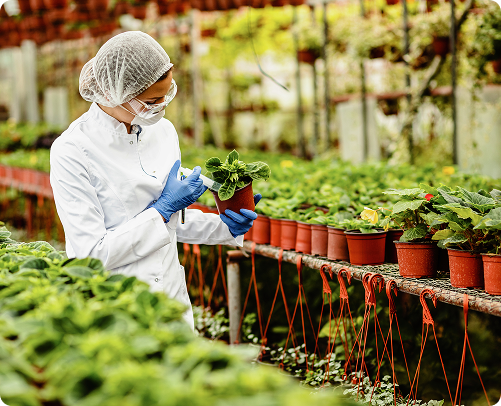
Agriculture has always been more than an economic activity—it is the foundation of food security, cultural continuity, and rural livelihoods. For the Bakgatla Ba Kgafela Kingdom, whose ancestral lands stretch across South Africa’s North West Province and Botswana’s Kgatleng District, agriculture represents one of the greatest opportunities to achieve sovereignty, resilience, and shared prosperity. While mining often dominates headlines, the soil beneath Bakgatla land holds a wealth of potential waiting to be cultivated.
The Case for Agriculture in Bakgatla Lands
The North West Province receives between 350–650 mm of annual rainfall, sufficient to support cereals like maize, sorghum, and sunflower. In Kgatleng, rainfall is lower (300–450 mm), but drought-tolerant crops such as pulses and groundnuts thrive with modern irrigation methods.
Soils are varied but productive:
- Alluvial and sandy loams along seasonal rivers sustain row crops.
- Red/yellow apedal soils are well-suited to grazing and silvopasture.
- Groundwater boreholes and small dams add irrigation potential, enabling intensive horticulture.
Conservatively, the Bakgatla estate can mobilize 8,000–12,000 hectares of dryland farming and 1,000–2,000 hectares of irrigated horticulture, creating a diversified agricultural base.
This natural resource base positions the Kingdom as a regional food basket—capable not only of feeding its own communities but also supplying surrounding markets.
Addressing Structural Challenges
Despite the opportunity, agriculture in South Africa and Botswana faces systemic hurdles:
- Limited capital access prevents smallholders from modernizing.
- Outdated techniques keep yields below global averages.
- Climate variability threatens food security.
- Market barriers restrict entry into high-value value chains.
For the Bakgatla, these challenges translate into import dependency and lost income. Botswana currently imports more than 70% of its vegetables and grains, while South Africa is a net importer of wheat and rice. Substituting even a fraction of this demand locally would unlock millions of dollars in new revenue streams.
Domestic and Regional Market Signals
Agricultural markets around Bakgatla lands are large, growing, and often undersupplied:
- Staples: South Africa produces 12–16 million tons of maize annually, but North West millers remain heavy buyers of sorghum and yellow maize for animal feed.
- Horticulture: Johannesburg’s City Deep Market and Gaborone’s fresh-produce market trade over 1 million tons per year, paying premiums for reliable, traceable supply.
- Protein: South Africa slaughters over 3 million cattle annually. Botswana exports premium beef to the EU under quota, while festive demand for goats and sheep continues to grow.
For the Bakgatla, entering these markets is less about creating demand and more about meeting unmet supply with competitive, high-quality output.
Job Creation Through Agriculture
Agriculture is labor-intensive, making it one of the most effective engines for employment in rural communities. At projected scales, Bakgatla farming could generate:
- 0.2–0.4 jobs per hectare of dryland farming.
- 1.2–1.8 jobs per hectare under irrigation.
- 0.3–0.5 jobs per ton of horticulture processed.
Combined, this translates to 3,000–5,000 direct and indirect jobs at steady state—ranging from field labor to processing, logistics, and agri-services.
Beyond numbers, agriculture provides inclusive pathways for women and youth. Nursery operations, horticulture clusters, and small-stock management are natural entry points for young entrepreneurs and female-led enterprises. Contract-farming models can also formalize 200–400 smallholders within three to five years, integrating them into profitable value chains.
Food Security and Import Substitution
One of the most pressing benefits of Bakgatla agriculture is its role in food sovereignty. By substituting imports with local production:
- Botswana could cut vegetable imports by 10–15% through Kgatleng supply.
- North West could reduce dependence on maize imports by 2–3%.
This doesn’t just save money—it ensures households are less vulnerable to global price shocks and supply disruptions, improving nutrition and resilience at the community level.
Value Addition and Logistics
The real multiplier effect of agriculture lies in processing and distribution. Cleaning and grading grains adds 3–8% in value, milling adds 12–18%, and cold-chain horticulture packing can add 10–20%. Meat processing lifts livestock value by 15–25%.
Strategically, the Bakgatla can invest in packhouses, micro-mills, and feedlots located near arterial routes like the N4/N1 in South Africa and A1 in Botswana. With 4–6 hour truck-to-market times, post-harvest losses are minimized and just-in-time deliveries to Johannesburg, Brits, Rustenburg, and Gaborone become feasible.
Agriculture as Cultural and Economic Sovereignty
For the Bakgatla Ba Kgafela, agriculture is not only about economics—it is about identity and continuity. Farming preserves traditional crops, indigenous knowledge, and cultural practices that connect the community to its land. When modern techniques are blended with traditional stewardship, agriculture becomes a living expression of sovereignty.
Conclusion: Farming a Future of Prosperity
Agriculture holds the power to redefine the Bakgatla economy. With fertile soils, access to regional markets, and the capacity to employ thousands, farming can be the Kingdom’s strongest pillar of food security and job creation.
By mobilizing land, investing in value addition, and creating inclusive opportunities for women and youth, the Bakgatla Ba Kgafela can turn agriculture into a source of pride, prosperity, and intergenerational wealth.
The choice is clear: mining may bring immediate revenues, but agriculture builds sustainable foundations—feeding families, employing communities, and empowering the Kingdom for generations to come.


